MaviKöşk Lefkoşa fotoğraf 1

MaviKöşk Lefkoşa

kibris · Müze

BewertungNoch keine Bewertung

Über die Location

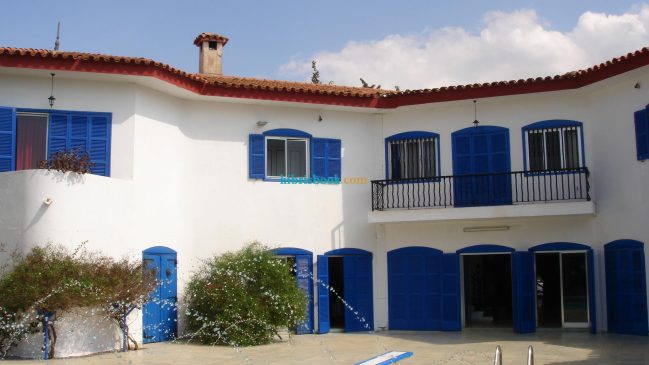
Northern Cyprus's Most Enigmatic Spot: The Blue Mansion

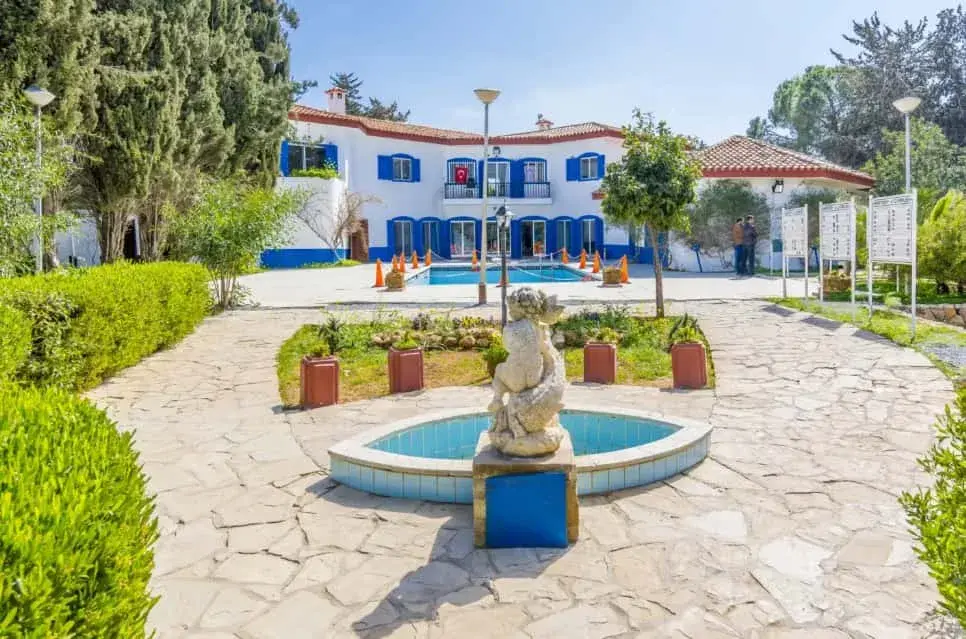
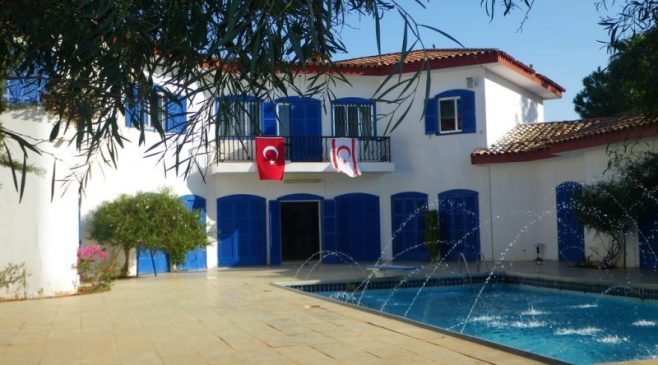
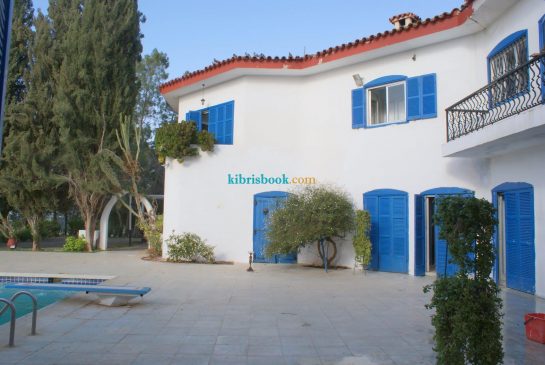
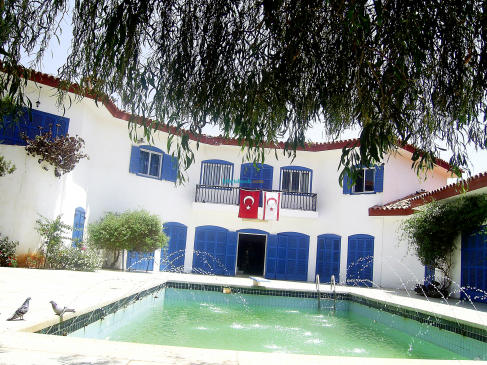
Blue Mansion exterior, Çamlıbel village, Northern Cyprus

It's strange enough for an attorney to smuggle weapons, but having his architect murdered to safeguard the mansion's secrets is what truly sends shivers down your spine. When Paulo Paolides, a Greek man of Italian descent, built this two-story, sixteen-room mansion in the mountainous terrain of Northern Cyprus in 1957, he had only one thing in mind: invisibility. As one of the Middle East's biggest arms smugglers, he needed a location that commanded everything, yet remained unnoticed by anyone.

This decision by Paolides, who is even rumored to have killed the architect after construction was complete, remains one of the most striking details that perpetuates the mansion's legend to this day.

Where and What Kind of Place Is It?

Hidden near Çamlıbel village, on the Kyrenia – Güzelyurt mountain road, the Blue Mansion is a surprisingly modern structure for the technological capabilities of its era. Paolides designed it not as a living space, but as an arms distribution base. This functionality was prioritized from the choice of location to every detail of the building's design.

Each of the rooms was painted a different color, and each color held a distinct meaning. The red room hosted mafia meetings. The blue room was reserved for guests, and the yellow room for their children. The tables in the rooms were also painted the same color; everyone already knew where they were supposed to sit.

Blue Mansion interior, colorful roomsBlue Mansion detail photo

Pricey Art, Secret Vaults, and a French Painter

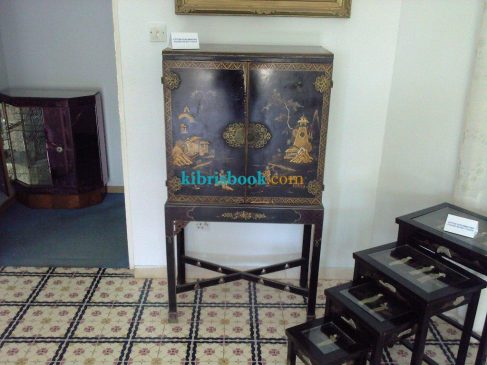
Paolides, who had a deep interest in art, furnished the mansion with expensive paintings, trinkets, liquor cabinets, and handcrafted Persian carpets. Some of the artworks he purchased himself, while others were received as gifts. The most striking piece in this collection is the painting of the Virgin Mary, donated by a famous French painter in 1971. Its interesting feature is that no matter what angle you view it from, the Virgin Mary's hands, eyes, and knees appear to be turned towards you.

As you move into the bedroom, the secrets multiply. One of the two windows shows the sunrise, the other the sunset. The curtains are soundproof. A hidden hatch right behind the bed opens to a secret vault. The nine-dimensional mirror specially imported from the Far East is another intriguing mystery. Moreover, the mansion even has a room designed to be earthquake-resistant, capable of separating from the main structure during an earthquake; devising such a construction at that time was considered a true engineering marvel.

Legendary Details of the Mansion: From Sophia Loren to Escape Tunnels

The mansion featured a fountain with wine flowing 24/7, a color-changing liquor cabinet made of chameleon skin, an earthquake warning device, a small pool reserved for milk baths, and emergency escape tunnels. It's even said that Sophia Loren, one of the famous actresses of the era, visited here to take milk baths.

So, how did Paolides leave this mansion? During the 1974 Cyprus Peace Operation, he managed to escape to Italy using the tunnels beneath the structure. Despite being far from the country, he continued to send money from Italy for the mansion's maintenance. He ultimately lost his life in 1986 during a mafia meeting he attended.

Blue Mansion historical photoBlue Mansion chameleon skin liquor cabinet

Visiting Information: Hours and Location

Opening Hours

The Blue Mansion is closed on Mondays. On other days, it welcomes visitors between 09:00 and 17:00. Keep this in mind when planning your visit; especially if you intend to set off at the start of the week, it's best to postpone until Tuesday.

Location

Reaching the Blue Mansion, located near Çamlıbel village on the Kyrenia – Güzelyurt mountain road, by car is the most practical option. The scenery along the way is an experience in itself; you'll get to explore the mountainous interior of Northern Cyprus before even arriving at the mansion.

Bewertungen

Benzer Müzeler

Antiphonitis Kilisesi
Müze

Antiphonitis Kilisesi

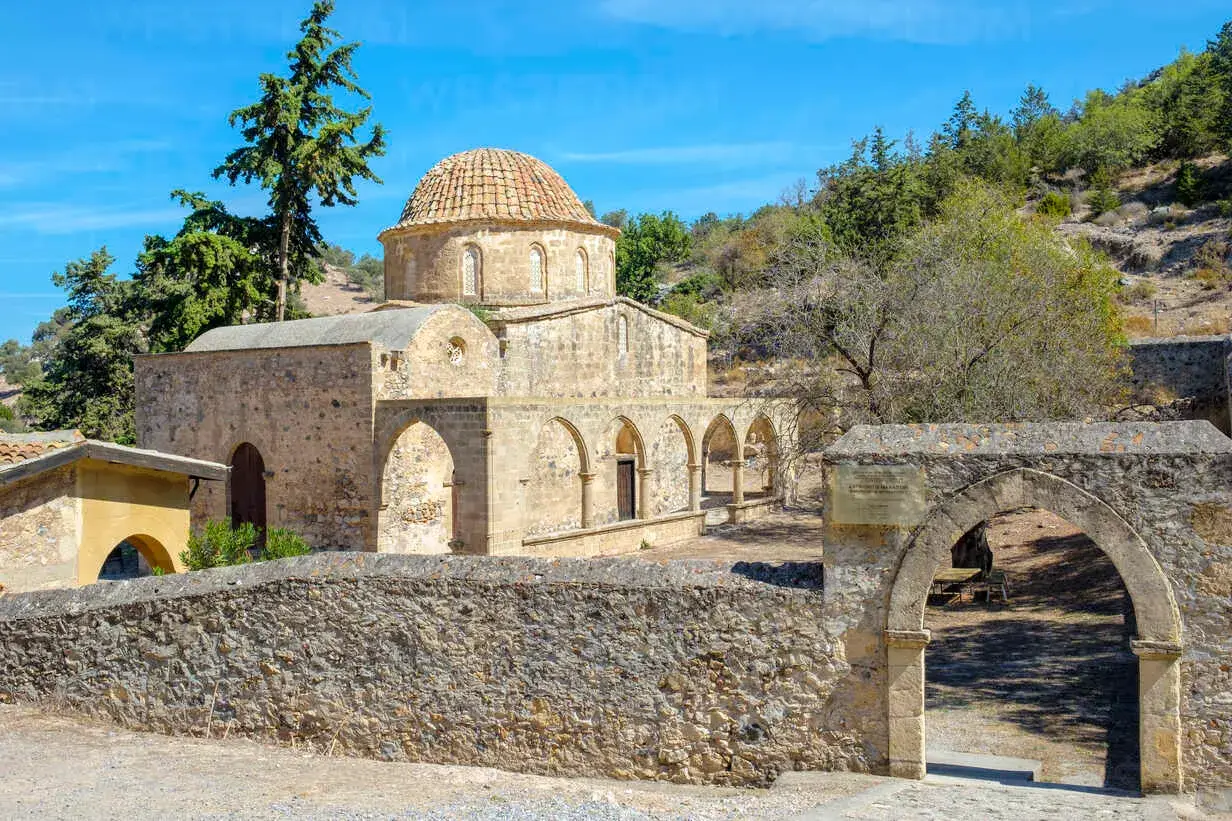
Antiphonitis Church Kyrenia / Northern Cyprus Named after the Greek word meaning "Christ Who Answers," the Antiphonitis Church is hidden within a steep valley 8 km east of Kyrenia, near the town of Esentepe. Even the road leading there is an experience in itself: narrow, winding, surrounded by pine and olive trees. Built in the late 12th century, this structure distinctly stands out from other Byzantine churches across the island. So, what makes it different? First and foremost, its architecture. The church was designed with a circular dome resting on eight columns, an arrangement quite unusual for the period. It is believed that local masters and artists were involved in its construction, a notion supported by the unique touches evident in the structure. The church was later expanded: in the 14th and 15th centuries , during the reign of the Lusignan dynasty, a barrel-vaulted narthex and portico were added to the structure. These additions represent one of the rare instances where the Byzantine essence met Western Christian architectural understanding. Very few structures bear the marks of different periods simultaneously; Antiphonitis is one of them. Wall Paintings and the Pantocrator Fresco Upon entering, the first thing to catch your eye will be the depictions of saints covering the walls. These scenes are believed to be inspired by biblical narratives; the facial expressions of the figures, color choices, and composition style bear the typical characteristics of Byzantine iconography. In the very center of the dome is the fresco of Christ Pantocrator ; this iconographic theme, meaning "Ruler of All," was placed in the dome in Byzantine churches so that the divine gaze would encompass the entire space. Unfortunately, some of these paintings have not survived intact to the present day. During Cyprus's political division after 1974, some frescoes were damaged, and a portion was torn from the walls by smugglers and sold on international markets. Although some of these pieces have been recovered after years of legal battles, the destruction they left behind is still visible. Where is Antiphonitis Church? The church is located in a valley, approximately 8 km south of the town of Esentepe, which is part of the Kyrenia district. Direction signs are available along the way; however, renting a car makes the visit much easier. Since public transport access is quite limited, it is recommended to go by private vehicle.
Noch keine Bewertungen
Girne Kalesi
Müze

Girne Kalesi

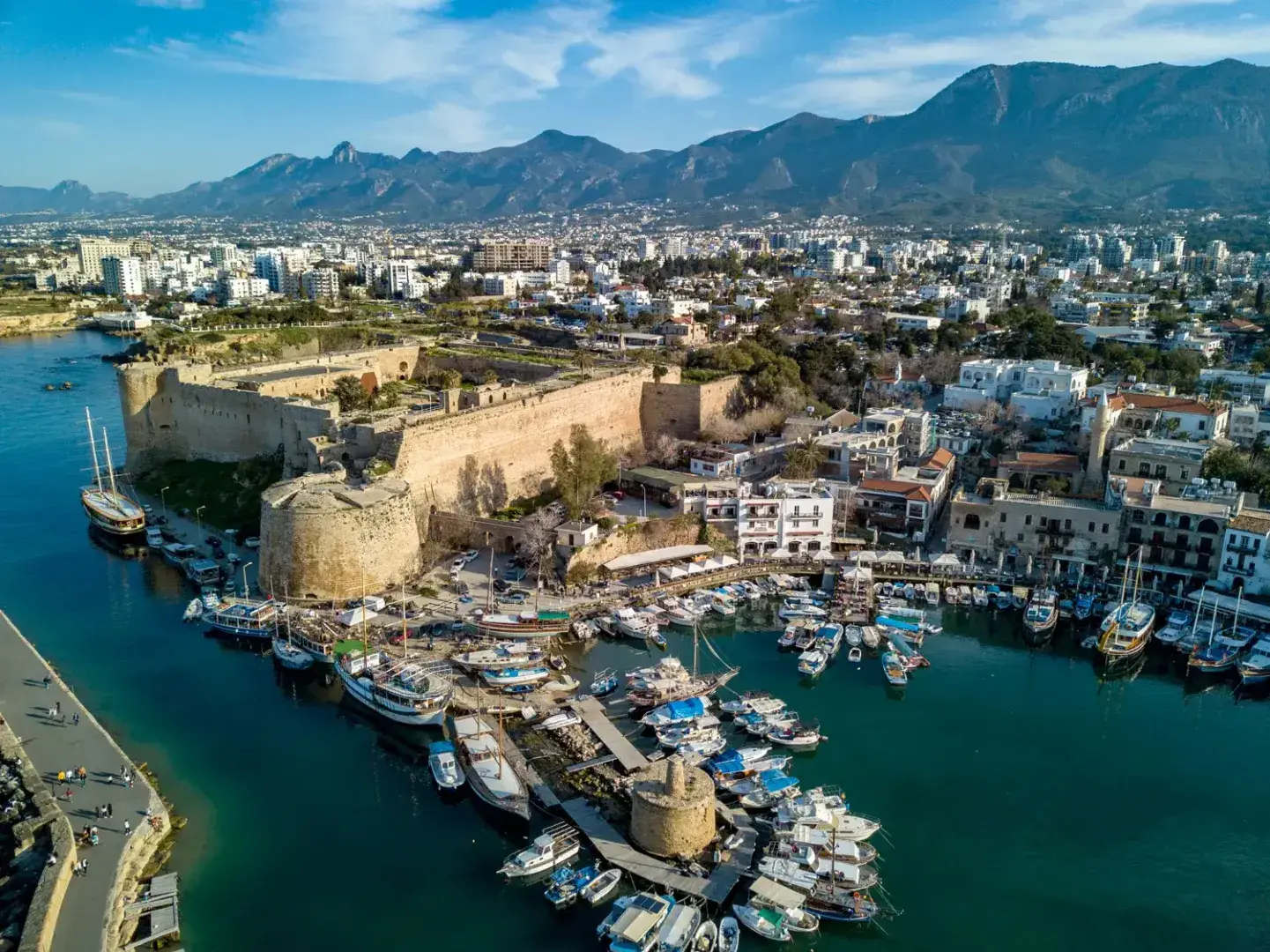
A Millennium of History in a Single Castle The **Byzantines**, who ruled Cyprus in the 7th century, built this castle to repel Arab raids from the Mediterranean. Today, this structure stands as **Kyrenia's most renowned symbol**, nestled right on the edge of the marina, intimately connected with the sea. The moment you step through its gates, the city's hustle and bustle instantly fade away. In the 1400s, the castle was encircled by a deep, water-filled moat. After the Genoese attacks in 1373, the castle changed hands multiple times; the structure we see today largely bears the hallmarks of the **Venetians**. From Venice to the Ottomans: A Fort's Shifting Fortunes The **Venetians**, who seized the castle in 1489, added new towers to the structure, hoping to withstand the cannon fire of the Ottoman navy from the sea. But did all these preparations work? No. Immediately after **Nicosia** surrendered to Ottoman forces in 1570, Kyrenia Castle also raised the white flag without a single shot being fired. This surrender demonstrates that the castle's fate was shaped not by defeat, but by a change in destiny. The walls remained, but the people living within them changed. Exploring Inside the Castle **Kyrenia Castle** isn't a perfect square, but it boasts a near-square plan with a tower at each of its four corners. Historical artifacts unearthed during excavations in and around Kyrenia are showcased in the castle's museum sections. As you stroll through the stone corridors, you might feel as though you're wandering through an encyclopedia, with each section narrating the story of a distinct historical period. One of the castle's most captivating corners is the **Byzantine Church**, dating back to the **1100s**. Additionally, various historical events are reenacted in the castle courtyard, transforming the site from a mere museum into a vibrant open-air stage. Where is Kyrenia Castle Located?

Noch keine Bewertungen
Bellapais Manastırı
Hervorgehoben
Müze

Bellapais Manastırı

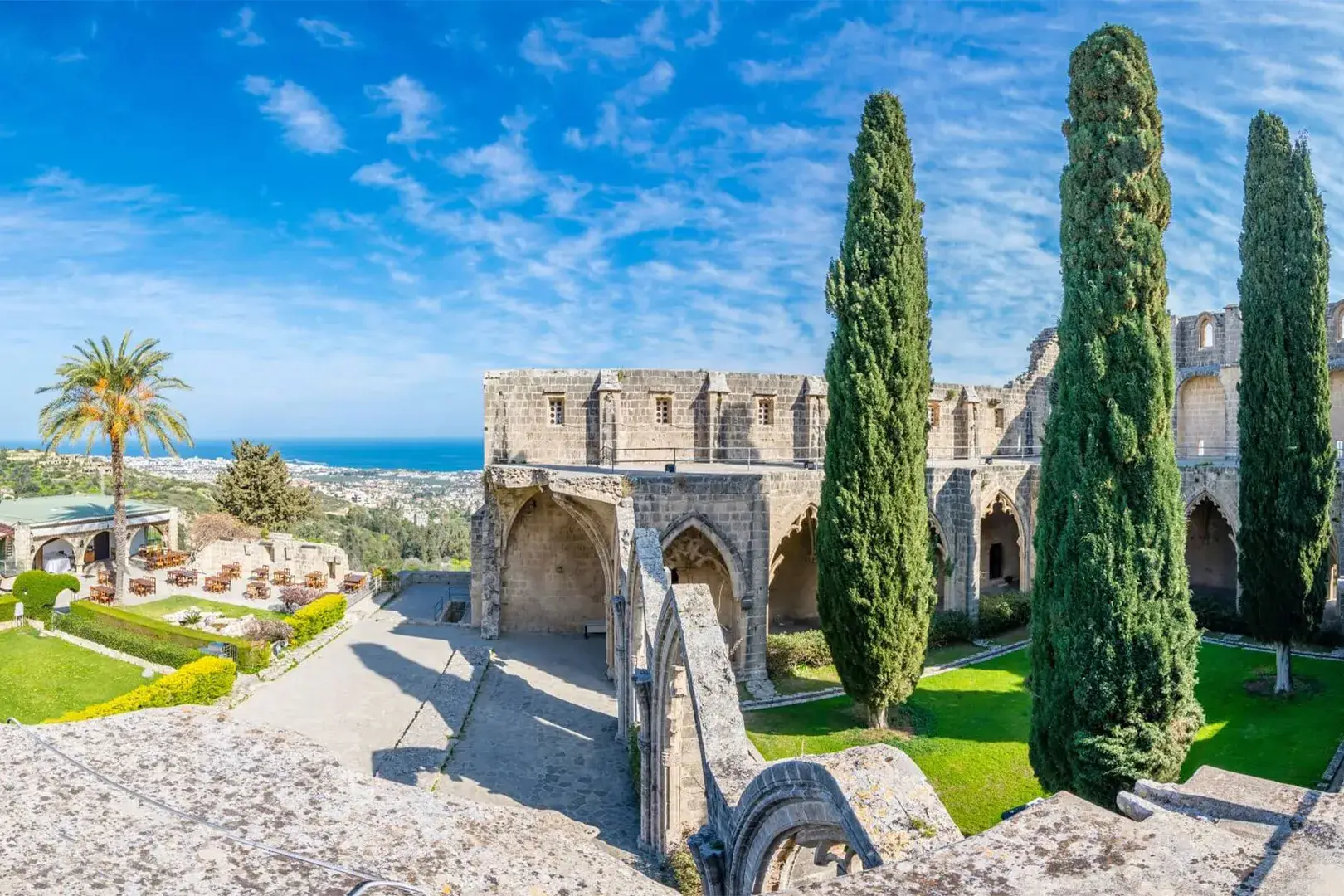
## Bellapais Abbey Beylerbeyi / Kyrenia - TRNC **Bellapais Abbey**, quietly nestled at the foot of the Five Finger Mountains, was constructed between 1158 and 1205. Today, this remarkable structure hosts various music festivals and classical music concerts, making it one of Northern Cyprus's most striking historical sites. Everyone who steps into the Abbey is swept back through past centuries, losing track of time. ## Layers of History: Gothic Architecture in the Near East One of the finest examples of Gothic architectural style in the Near East, **Bellapais Abbey**'s first inhabitants were Augustinian monks who migrated from Jerusalem. Between 1267 and 1284, King Hugh III of France added new sections to the structure, giving the Abbey its present-day appearance. The central courtyard and its surrounding cloisters were built by Hugh IV between 1324 and 1359. Following the Ottoman conquest of the island, the Abbey was transferred to the Cypriot Orthodox Church, and for many years, only the church section remained functional. ## Stepping Inside: What You'll Discover Your first step into **Bellapais Abbey** brings you to a gate and a spacious courtyard. The church in the corner of the courtyard has stood since the 13th century; despite bearing the weight of centuries, the structure remains remarkably robust. The frescoes on the Abbey's facade date back to the 15th century. Additionally, a large, rectangular refectory is located within the structure; this area is considered one of the most accomplished examples of **Gothic art**. The pulpit where the monk delivered sermons during meals still stands in place. Passing through the west gate of the courtyard, you can reach the kitchen, cellar, and lavatories on the lower floor. To the east of the central courtyard is the monks' common room and study. The column in the center of this room is believed to belong to a Byzantine church. On the upper floors of the Abbey, there are dormitories and areas for storing valuables. ## A Kyrenia View: Bellapais by Night **Bellapais Abbey** can be seen with the naked eye from many points in Kyrenia. As dusk falls, if you look towards the **Five Finger Mountains**, you'll immediately spot the Abbey sparkling brightly with its special illumination. This view forms one of the city's most recognizable silhouettes. Having come all the way to Cyprus, can one really afford to miss this magnificent structure? Appealing to a wide audience, from Gothic architecture enthusiasts and history buffs to classical music lovers and photography aficionados, Bellapais truly deserves a top spot on your itinerary. ### Where is Bellapais Abbey?

Noch keine Bewertungen